
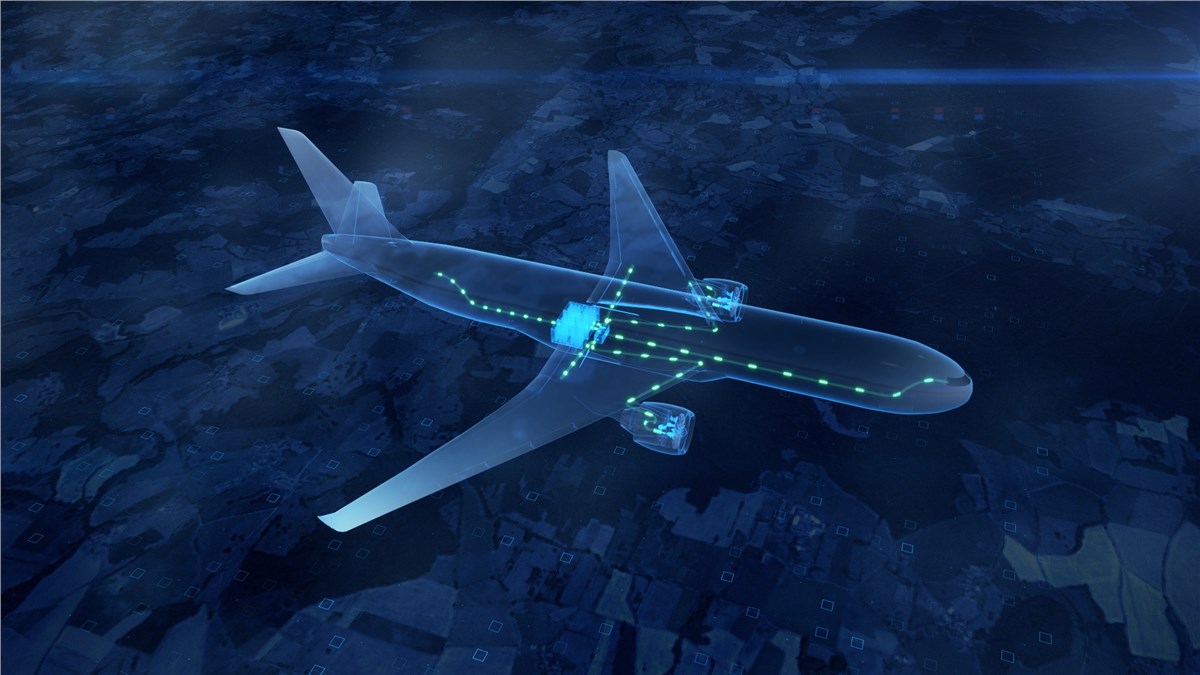
Airbus, together with partners from across the European Union, the UK and the US, is advancing its ambition to develop a hybrid-electric non-propulsive energy architecture for the next generation of commercial aircraft through LEIA — Large Scale Integration Demonstrator of Hybrid Electrical Architecture.
Supported by the European Union Clean Aviation Joint Undertaking, LEIA will advance high-voltage generation and distribution technologies for innovative electrical aircraft systems for short-to-medium range aircraft. The project aims to bridge the gap between component-level innovation and aircraft-level maturity, preparing these technologies for future integration and certification.
Karim Mokaddem, Head of Aircraft of Tomorrow Research and Technology at Airbus, said the progress in developing hybrid-electric technologies and the move into the LEIA demonstrator represent a pivotal shift in the design of future aircraft. He added that integrated and intelligent hybrid-electric architectures will help establish the physical and digital foundation for the next generation of aircraft.
LEIA builds on the successful completion of the SWITCH project, which focused on hybrid-electric powertrain subsystems and reached a key milestone in July when Collins Aerospace completed integrated laboratory testing. The achievement resulted from collaboration among project partners including Pratt & Whitney, GKN Aerospace and MTU Aero Engines.
The subsystems, which operate alongside simulated aircraft and engine systems, are now transitioning to the Airbus Sustainable Technology and Engineering Projects (STEP) laboratory in Ottobrun, Germany. Airbus teams will conduct aircraft-level integration testing covering areas including design, battery interfacing and energy-management systems.
Airbus is leading the integration of advanced electrical components, including scalable motor/generators, next-generation electronic controllers and power distribution equipment, alongside other aircraft systems. The systems will undergo a comprehensive testing programme leading to a ground demonstration planned for 2027.
SWITCH and LEIA build on Airbus’ continued collaboration across multiple Clean Aviation projects focused on electrification technologies for regional and short-to-medium range aircraft. Through cross-border supply chain integration and technical requirements, Airbus is working to advance aviation towards greater electrification with the objective of reducing greenhouse gas emissions.
Airbus is collaborating with several partners on the LEIA project, including AVL, Collins Aerospace, the European Aerospace Science Network (EASN), Fraunhofer-Gesellschaft, Liebherr Aerospace, Lynxeo, the Netherlands Aerospace Centre (NLR), Safran, SAFT, the University of Warwick, and Wroclaw University of Science and Technology.
