
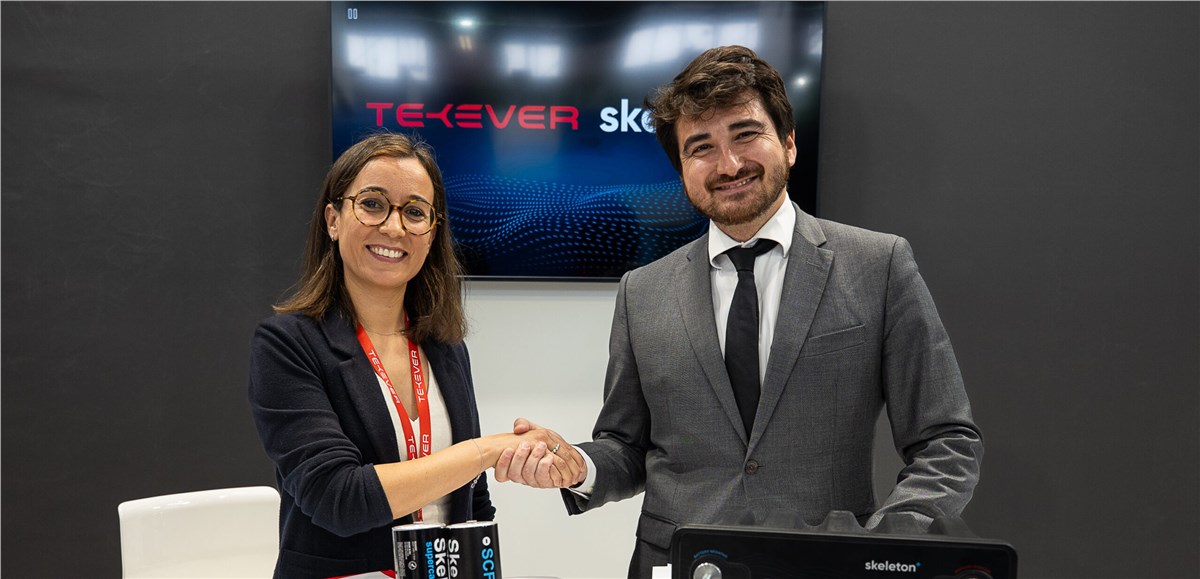
TEKEVER, a multinational technology company specialising in AI-driven autonomous systems, and Skeleton Technologies, a European developer of high-performance energy storage and power systems, have signed a Memorandum of Understanding (MoU) at Eurosatory 2026 to explore strategic cooperation across defence, aerospace and advanced technology applications.
The agreement establishes a framework for the companies to assess potential areas of collaboration, including advanced power architectures for autonomous systems, sensing technologies, space-related capabilities and future sovereign European defence and dual-use applications. The cooperation could also extend to edge computing, defence AI training and inference infrastructure, and AI-enabled defence systems.
By combining their complementary capabilities, TEKEVER and Skeleton Technologies aim to explore new technology solutions for autonomous platforms and other mission-critical defence and aerospace applications. The partnership reflects the growing focus among European technology companies on developing resilient and sovereign capabilities within Europe.
The agreement also supports TEKEVER’s expanding engagement with Estonia’s defence and technology ecosystem. The company recently opened its first office in Tallinn, strengthening its presence in Estonia and its engagement with the country’s technology and defence industry. Cooperation with Skeleton Technologies further connects TEKEVER with a European industrial technology partner and highlights the increasing importance of the Baltic region and NATO’s Eastern flank within Europe’s defence technology landscape.
The partnership also brings together industrial capabilities spanning Estonia, France, Portugal and the UK. In France, TEKEVER has recently increased its investment plans, while Skeleton Technologies operates a defence hub. The companies are exploring opportunities to develop projects within the Toulouse aerospace ecosystem and use their respective European footprints to support future programmes across allied markets.
The MoU comes as European governments and defence industries place increasing emphasis on autonomous systems, artificial intelligence, advanced energy technologies and other dual-use capabilities. Technologies that combine autonomous operation, high-performance computing and efficient power systems are becoming increasingly important for future aerospace and defence platforms.
Ricardo Mendes, CEO of TEKEVER, said: “Europe’s security and technological leadership depend on our ability to bring together the continent’s most innovative companies and capabilities. By combining TEKEVER’s expertise in autonomous systems, AI and operationally proven defence technologies with Skeleton’s leadership in advanced power systems, we are creating new opportunities to support the next generation of European defence and aerospace capabilities for NATO and beyond.”
Taavi Madiberk, CEO of Skeleton Technologies, said: “TEKEVER is building exactly the kind of mission-critical autonomous defence and space systems that require a new class of power. Our partnership aims to deliver on Europe’s needs future-proof systems to meet the demands of high-intensity conflict and aerospace technologies that reinforce European sovereignty.”
Estonian Minister of Defence Hanno Pevkur said: “Estonia and France’s partnership extends far beyond military cooperation. Increasingly, it also encompasses the defence industry, procurement, innovation, and capability development. I am pleased that, during Eurosatory, several agreements between French and Estonian companies will further strengthen this cooperation.”
The cooperation between TEKEVER and Skeleton Technologies highlights the broader development of European defence technology partnerships, particularly in autonomous systems, artificial intelligence, advanced power technologies and space applications. As European defence industries continue to develop sovereign capabilities, collaborations between specialist technology companies could play an important role in future defence and aerospace programmes.
