

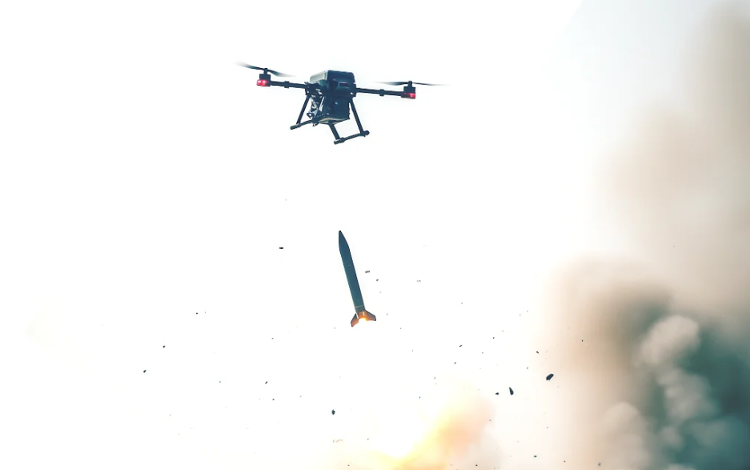
Frankenburg Defence and Hanwha Aerospace have announced a strategic collaboration to co-develop advanced counter-unmanned aircraft system (C-UAS) solutions tailored for integration with land-based weapon platforms. The agreement seeks to combine each company’s strengths to deliver modular, scalable air defence capabilities that can be mounted on combat vehicles, tactical vehicles and mobile armoured platforms.
Under the partnership, Frankenburg Defence will contribute expertise in platform integration and weapon systems engineering, while Hanwha Aerospace brings its extensive experience in air defence technology, fire control systems and battlefield automation. Together, the two firms aim to accelerate development of C-UAS systems that enhance protection for ground forces against increasingly sophisticated unmanned threats.
The joint effort focuses on technologies that can autonomously detect, track and defeat hostile drones using a range of effectors, including directed energy, electro-optical systems, radio frequency (RF) jammers and precision munitions. By embedding these capabilities on existing land weapon platforms, the goal is to provide integrated air-defence functionality without requiring dedicated standalone units, improving tactical flexibility and response time for forward deployed forces.
Modern battlefields have seen a marked proliferation of small unmanned aerial systems, including commercial off-the-shelf drones and purpose-built loitering munitions, which pose challenges to traditional force protection methods. Mobile C-UAS solutions are increasingly viewed as critical enablers, allowing units to defend themselves while remaining agile and mission-focused. The collaboration between Frankenburg and Hanwha reflects this trend, emphasising modularity and ease of integration alongside performance.
The program is expected to explore advanced sensor fusion techniques that combine radar, electro-optical/infrared (EO/IR) imagery and RF detection into a coherent air-picture, enabling reliable target classification and tracking. Integrating such sensor suites with responsive mitigation options — whether through jamming, directed energy or kinetic effects — allows for layered defence tailored to threat profiles and mission priorities.
Developing C-UAS capabilities for land weapon platforms aligns with broader defence strategies that prioritise networked, multi-domain situational awareness. The partnership aims to produce systems that can contribute to an integrated air defence network, sharing data with higher-level command and control systems and facilitating coordinated engagements.
By leveraging Frankenburg’s platform expertise and Hanwha’s technical heritage, the collaboration seeks to accelerate production and field readiness of mobile C-UAS solutions. The initiative reflects rising global demand for systems that protect ground forces from aerial threats while preserving mobility, survivability and operational effectiveness in contested environments.
